
Osteoporosis: The Silent Bone Thinner; Are You at Risk?
- Dr Vinayaraj Kelagadi

- Oct 6, 2025
- 2 min read
By Dr. Vinayaraj M. Kelagadi, Orthopaedic Joints & Spine Specialist, Kossin Care, Bangalore
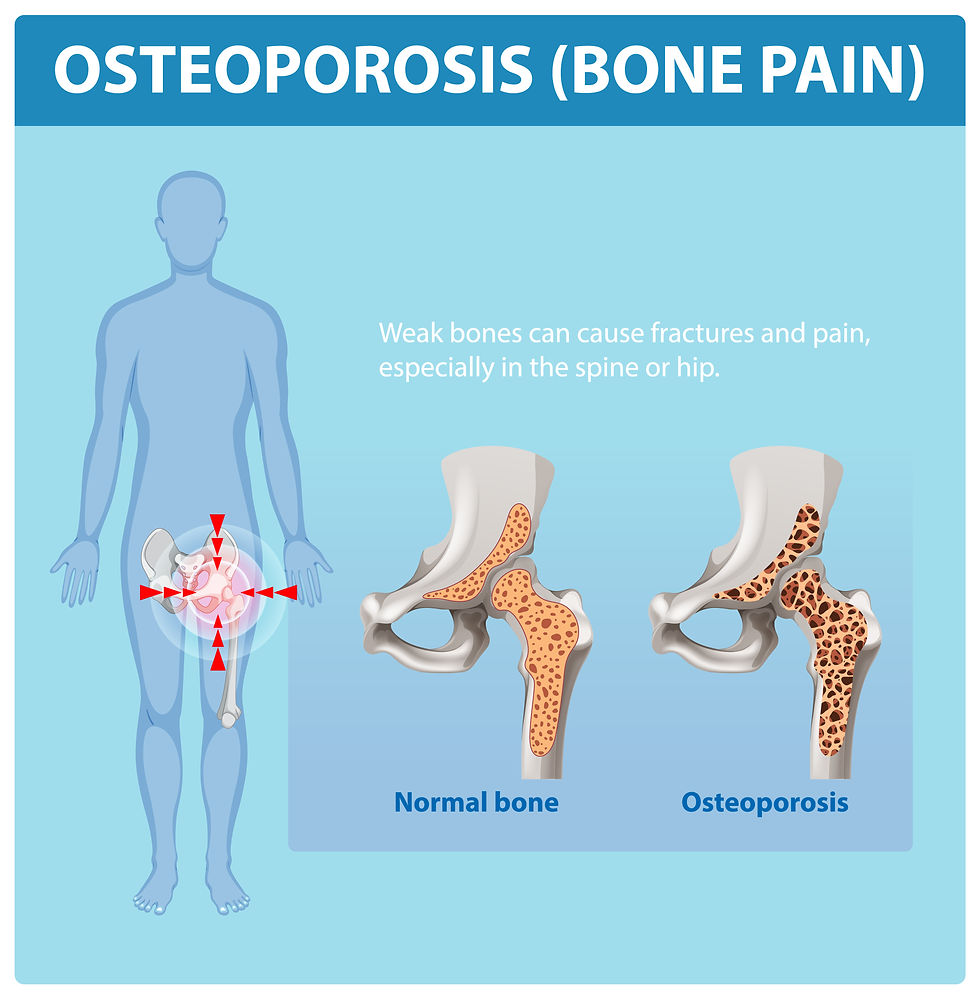
Understanding Osteoporosis
Osteoporosis is often called the “silent bone disease” because it develops quietly over time—without pain or visible symptoms—until a fracture occurs. It weakens the bones, making them thin, fragile, and more prone to breaks, especially in the hip, spine, and wrist.
As we age, our bones naturally lose density. But for some, this process happens faster, leading to osteoporosis. What makes it dangerous is that most people don’t realize they have it until a minor fall or even a simple sneeze causes a fracture.
⚠️ Who Is at Risk?
Certain factors increase your risk of developing osteoporosis:
Age: Risk increases after 50, especially in post-menopausal women.
Gender: Women are more likely to develop osteoporosis due to hormonal changes after menopause.
Family history: A parent or sibling with osteoporosis increases your likelihood.
Lifestyle factors: Smoking, excessive alcohol, and lack of physical activity weaken bone health.
Low calcium and vitamin D intake: Poor nutrition accelerates bone loss.
Certain medications: Long-term steroid use and some anti-seizure drugs can affect bone density.
"Strong bones build a strong life — don’t wait for a fracture to listen to your bones."

🍎 Strengthen Your Bones Naturally
Preventing or managing osteoporosis begins with bone-healthy habits:
Calcium-rich diet: Include dairy, leafy greens, sesame seeds, and fortified foods.
Vitamin D: Spend time in sunlight and include eggs, fish, or supplements if needed.
Regular exercise: Weight-bearing exercises like walking, jogging, or yoga help strengthen bones.
Avoid smoking and limit alcohol: Both directly reduce bone formation.
Bone density test: A DEXA scan can detect early signs of bone loss and guide treatment.
💊 Medical Management
At Kossin Care, Bangalore, we provide comprehensive osteoporosis care that includes:
Bone density screening (DEXA scan)
Calcium and vitamin D supplementation
Lifestyle modification guidance
Medication or hormonal therapy (if needed)
Tailored physiotherapy to improve balance and reduce fall risk
Early detection and personalized treatment can prevent fractures and improve quality of life.
Osteoporosis: The Silent Bone Thinner; Are You at Risk?


Comments