
Fall Prevention Tips for Elderly to Avoid Fractures

A Complete Guide to Senior Safety and Bone Protection
By Dr. Vinayaraj M. Kelagadi, Kossin Care
As people age, the risk of falls and fractures increases significantly. A simple slip at home can lead to serious injuries such as hip fractures, spine injuries, wrist fractures, or knee damage. For elderly individuals, recovery after a fracture can be slow and challenging, affecting independence and quality of life.
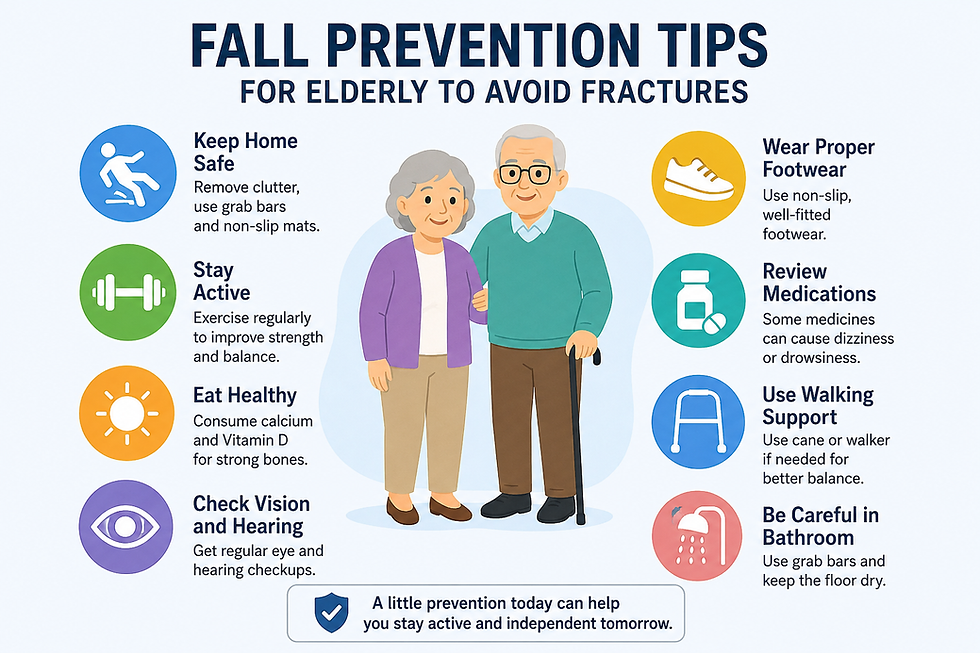
Fall Prevention Tips for Elderly to Avoid Fractures
Falls are one of the leading causes of hospitalization among senior citizens. However, many falls can be prevented with proper awareness, lifestyle changes, and home safety measures.
According to Dr. Vinayaraj M. Kelagadi, prevention is always better than treatment when it comes to elderly bone and joint health.
“A small precaution today can prevent a major fracture tomorrow. Elderly individuals must focus on balance, bone strength, and safe living environments to maintain independence and mobility.”— Dr. Vinayaraj M. Kelagadi
Why Are Elderly People More Prone to Falls?
As the body ages, several natural changes occur:
Reduced muscle strength
Weak bones due to osteoporosis
Poor balance and coordination
Reduced vision and hearing
Joint pain and arthritis
Slower reflexes
Side effects of medications
These factors increase the risk of accidental falls, especially inside homes and bathrooms.
Common Fractures Seen After Falls in Elderly
1. Hip Fractures
Hip fractures are among the most serious injuries in elderly individuals and often require surgery or joint replacement.
2. Spine Compression Fractures
Weak spinal bones may collapse even after minor slips or sudden movements.
3. Wrist Fractures
Elderly people instinctively use their hands during falls, leading to wrist injuries.
4. Knee and Shoulder Injuries
Falls can damage joints, ligaments, and muscles, limiting mobility.
Essential Fall Prevention Tips for Seniors
1. Keep the Home Safe and Clutter-Free
Most elderly falls happen at home. Creating a safer environment can drastically reduce accidents.
Home Safety Tips:
Remove loose rugs and slippery mats
Keep floors dry and clean
Arrange furniture with enough walking space
Use anti-skid tiles in bathrooms
Install grab bars near toilets and showers
Ensure proper lighting in hallways and staircases
Avoid electrical wires on walking paths
2. Improve Bone Strength
Strong bones are less likely to fracture during falls.
Bone Health Tips:
Consume calcium-rich foods like milk, curd, ragi, almonds, and leafy greens
Maintain adequate Vitamin D levels
Get regular sunlight exposure
Avoid smoking and excessive alcohol
Important Nutrients for Bone Health
Calcium
Vitamin D
Protein
Magnesium
3. Stay Physically Active
Regular movement improves balance, flexibility, and muscle strength.
Best Exercises for Elderly:
Walking
Gentle stretching
Chair exercises
Balance training
Physiotherapy-guided strengthening
Yoga for seniors
Even 20–30 minutes of daily activity can improve stability and reduce fall risk.
4. Use Proper Footwear
Improper footwear is a major cause of slipping.
Choose:
Non-slip footwear
Properly fitted sandals or shoes
Soft cushioned soles
Footwear with good grip
Avoid:
Loose slippers
High heels
Walking barefoot on smooth floors
5. Get Regular Vision and Hearing Checkups
Poor eyesight or hearing problems can affect balance and spatial awareness.
Elderly individuals should:
Use updated glasses
Treat cataracts early
Have routine hearing evaluations
6. Manage Existing Medical Conditions
Health issues like diabetes, arthritis, Parkinson’s disease, vertigo, and low blood pressure increase fall risk.
Regular medical checkups help:
Improve mobility
Control dizziness
Manage joint pain
Prevent weakness
7. Review Medications Regularly
Some medicines can cause:
Drowsiness
Dizziness
Weakness
Low blood pressure
Consult your orthopedic doctor or physician if you experience imbalance after taking medications.
8. Use Walking Support if Needed
Using support is not a sign of weakness—it is a safety measure.
Helpful Support Devices:
Walking sticks
Walkers
Handrails
Support bars
Proper support improves confidence and mobility.
9. Avoid Bathroom Accidents
Bathrooms are one of the most dangerous areas for seniors.
Bathroom Safety Measures:
Install grab handles
Use anti-skid mats
Raise toilet seat height if necessary
Keep soap and essentials within reach
Avoid water accumulation on the floor
10. Screen for Osteoporosis
Osteoporosis weakens bones silently and significantly increases fracture risk.
Warning Signs:
Back pain
Height reduction
Stooped posture
Frequent fractures
Bone density screening helps detect osteoporosis early and allows preventive treatment.
When to Consult an Orthopedic Specialist
Consult an orthopedic expert if an elderly person experiences:
Frequent falls
Hip pain
Knee instability
Difficulty walking
Sudden back pain
Weakness in legs
Joint stiffness
Early intervention can prevent major complications and improve quality of life.
Advanced Orthopedic Care at Kossin Care
Dr. Vinayaraj M. Kelagadi specializes in:
Joint replacement surgery
Spine care
Fracture management
Elderly orthopedic care
Knee and hip treatments
Mobility restoration programs
At Kossin Care, the focus is on helping senior citizens live safely, actively, and independently.
Falls in elderly individuals are not just accidents—they can become life-changing events. With proper precautions, regular exercise, strong bone health, and timely orthopedic care, most fractures can be prevented.
Creating a safe environment and encouraging healthy aging can help seniors maintain confidence, mobility, and independence for years to come.
If you or your loved one experiences balance issues, joint pain, or repeated falls, consult Dr. Vinayaraj M. Kelagadi for expert orthopedic evaluation and fracture prevention guidance.
Dr. Vinayaraj M. Kelagadi, Kossin Care, Orthopedic & Joint Replacement Surgeon


Comments